Corner bead provides a crucial protective layer for your drywall edges, yet it's often susceptible to dents and damage from daily wear and tear. Proper repair techniques can restore sharp, clean corners throughout your residence.
The Purpose of Corner Bead and Its Vulnerabilities
Corner bead serves as a protective strip—available in metal, vinyl, or with a paper facing—that covers the exterior angles where two drywall sheets meet. Without this component, the exposed gypsum edges would easily chip and crumble from minimal contact. The bead establishes a straight, consistent edge, which is then finished with joint compound for a smooth corner. While it safeguards the drywall, the bead itself is prone to damage from impacts. Everyday occurrences like furniture bumping corners, vacuum cleaners hitting baseboards, children's toys scraping walls, and moving large items through corridors all contribute to dents, bends, or cracks in the corner bead. In busy homes throughout [Birmingham](/locations/alabama/birmingham) and [Huntsville](/locations/alabama/huntsville), compromised corner bead is among the most frequent requests for drywall repair.
Diagnosing Drywall Corner Bead Damage Types
Corner bead damage typically falls into three categories, each necessitating a distinct repair methodology. Minor indentations that compress both the bead and the compound, but don't cause cracks or expose the metal, can frequently be corrected with joint compound alone. More significant deforming that bends the metal bead out of alignment will require reshaping or a partial component replacement. Cracks in the compound along the bead's edge—appearing as long vertical lines along the corner—are usually the result of the bead separating from the underlying drywall, often due to inadequate fastening or building movement. Understanding the specific type of damage you're facing will dictate whether a simple compound application will suffice or if the bead itself requires more extensive intervention.
Fixing Minor Dents with Joint Compound
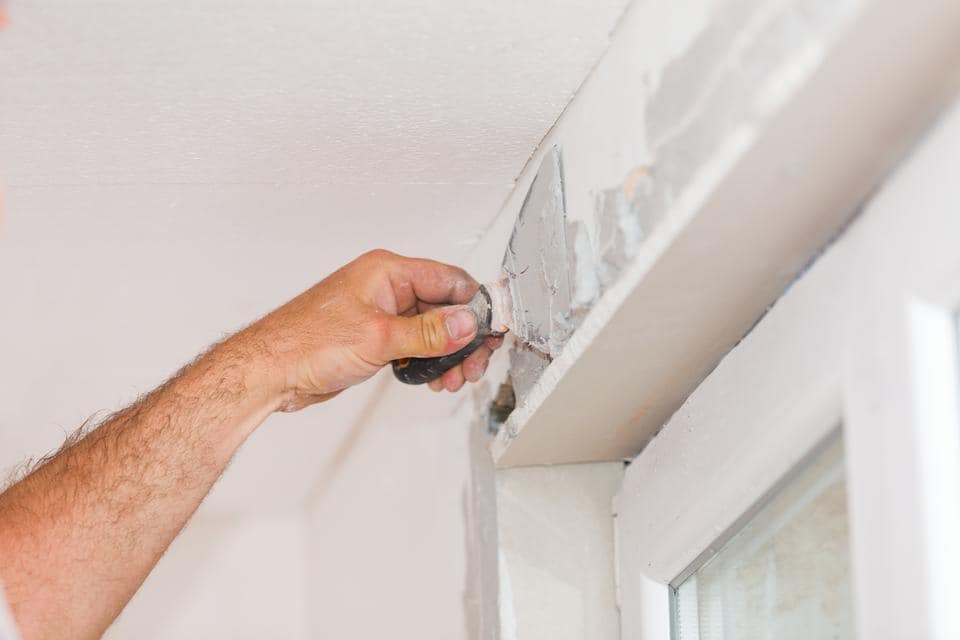
For minor indentations where the metal bead isn't significantly distorted, a repair using only joint compound can be highly effective. Begin by cleaning the affected area, removing any loose compound or paint. If the dent has caused the compound to pull away from the metal edge, carefully scrape the area clean to reveal the bead. Apply setting-type joint compound over the dent, building it up slightly above the surrounding surface. Use a wide drywall knife (at least six inches) held flat against the corner bead's edge to ensure a straight line as you smooth the compound. Allow the compound to dry completely, then sand it flush with the adjacent surface. A second application might be necessary to achieve a perfectly smooth finish. Our professional [drywall repair](/services/drywall-repair) teams in [Montgomery](/locations/alabama/montgomery) and [Mobile](/locations/alabama/mobile) commonly perform these quick repairs during routine home maintenance visits.
Replacing Sections of Compromised Corner Bead
When a metal bead is severely bent, kinked, or has detached from the wall, replacing the damaged section is the appropriate solution. Using tin snips, make clean horizontal cuts at the top and bottom of the affected corner bead section. Carefully pry the damaged piece away from the drywall, removing any fasteners in the process. Cut a new piece of corner bead to match the exact length of the section you removed. Secure it in place with drywall screws driven through the bead's flanges into the framing behind the drywall. The new section should align seamlessly with the existing bead above and below—use a straightedge along the corner to confirm alignment before permanent fastening. Then, tape and apply compound to the transitions between the old and new bead sections, feathering the compound out six to eight inches on each side for an unnoticeable blend.
Rectifying Corner Bead Separation from the Wall
Corner bead that has pulled away from the drywall surface creates a noticeable ridge or gap along the compound's edge. This often occurs when the bead wasn't adequately secured during installation—a common issue with nailed bead that wasn't fully driven—or due to building settlement causing shifts in the framing behind the drywall. The solution involves re-securing the bead by driving drywall screws through its flanges into the stud behind the drywall. Begin at the point of greatest separation and work outwards, pulling the bead snugly against the surface as you fasten. Once re-secured, apply a fresh layer of compound over the edge, feathering it out to seamlessly blend with the existing finish. Homeowners in [Tuscaloosa](/locations/alabama/tuscaloosa) experiencing settlement-related corner bead separation may find it necessary to address multiple corners throughout their residence as part of a single, comprehensive repair project.
Selecting Between Metal, Vinyl, and Paper-Faced Bead
When it's time to replace corner bead, you have an opportunity to upgrade from the original material. Traditional metal bead is rigid, creating sharp, precise corners, but it can dent easily and may rust in humid environments. Vinyl corner bead offers better dent resistance than metal, won't rust, and flexes slightly upon impact rather than deforming permanently. Paper-faced composite bead combines a rigid edge with paper flanges that embed into joint compound instead of being mechanically fastened, resulting in a smoother transition that requires less compound to achieve a finished look. For areas with high foot traffic, vinyl or paper-faced bead generally outperforms metal in terms of resisting everyday impact damage, while still ensuring clean, professional-looking corners.
Need Professional Drywall Help?
Contact Expert Drywall Repairs for a free estimate on your next project.
Get a Free QuoteLooking for drywall repair services in your area? Browse our full service directory by city.