When substantial wall-mounted items detach, they leave considerable damage to your drywall. Correct repair strategies and reinforced remounting are key to preventing recurrence.
The Causes of Heavy Objects Detaching from Drywall
Drywall isn't inherently designed to bear significant weight. A standard 1/2-inch panel can typically support only about five pounds per fastener when a nail or screw is inserted directly into the drywall—far less than many people assume. When substantial items such as large mirrors, floating shelves, televisions, and towel bars are affixed straight into drywall without anchoring into a stud or employing suitable anchors, the gypsum core invariably weakens around the fastener. This leads to the item falling, often causing a torn or enlarged hole, cracks in the surrounding drywall, and sometimes damage to the item itself or the floor underneath. Homeowners in [Boston](/locations/massachusetts/boston) and [Worcester](/locations/massachusetts/worcester) frequently encounter this problem, especially in older properties where various tenants have previously installed and re-installed fixtures in similar wall areas.
Evaluating Damage Prior to Repair
The chosen repair method depends on the extent of the damage. A small anchor hole—perhaps from a plastic expansion anchor or a toggle bolt that failed—is generally a simple patching task. More extensive holes where a section of drywall has ripped out around a shelf bracket or TV mount necessitate a more significant repair, possibly involving a drywall patch or replacing a portion of the panel. Before initiating repairs, remove any lingering anchors, screws, or mounting hardware from the wall. Inspect the area around the damage for cracks that radiate outwards; these can often extend several inches beyond the visible hole and must be addressed during the repair to ensure they don't become visible through the final painted surface.
Patching Minor Damage and Anchor Holes
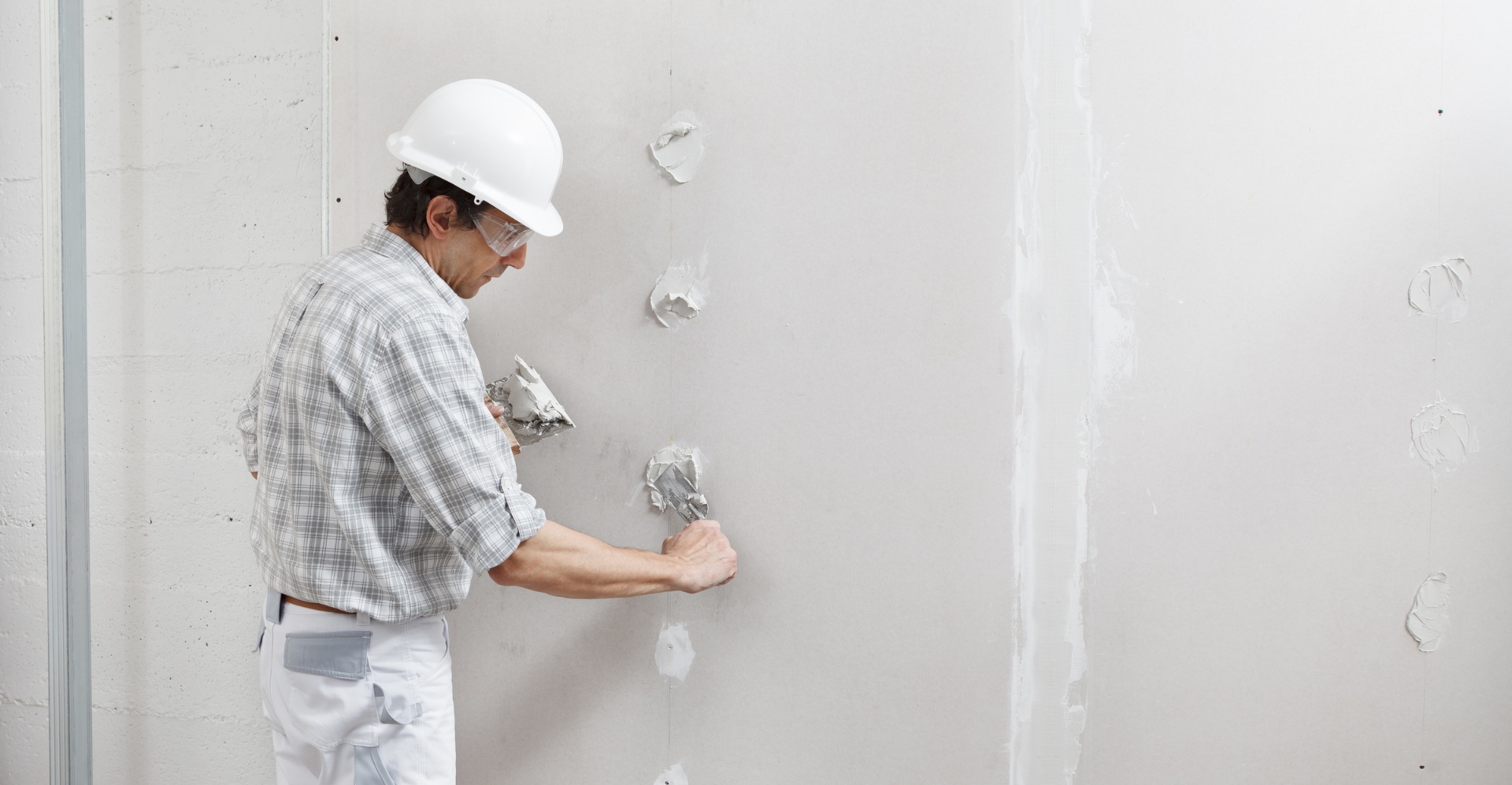
For holes up to roughly two inches in diameter, a straightforward fill-and-sand technique is effective. Clear away any loose gypsum debris from the hole, then firmly press setting-type joint compound into the void. If the hole goes entirely through the panel, first place a small piece of mesh tape or a backing support behind the opening to provide a base for the compound. Apply the compound in thin layers, allowing each to dry before adding the next. Two to three coats, with light sanding between each, should bring the surface flush with the surrounding wall. For [Springfield](/locations/massachusetts/springfield) and [Cambridge](/locations/massachusetts/cambridge) residents managing multiple small anchor holes across a wall, it’s much more efficient to perform all patching in batches—fill them all, let them dry, sand them all, then apply the second coat, rather than tackling them individually.
Mending Large Sections That Have Torn Out
When a heavy fixture has torn a section of drywall away—resulting in a hole larger than a few inches or an irregularly shaped damaged area—a proper patch is essential. Carefully cut the damaged area into a clean rectangle using a drywall saw, extending to the nearest stud on at least one side. If no stud is nearby, install wooden backing blocks behind the existing drywall on either side of the opening to provide support for fastening the patch. Cut a new piece of drywall to precisely fit the opening, secure it with drywall screws, and cover all seams with paper or mesh tape. Apply multiple coats of compound, gradually feathering each coat wider than the last for a seamless transition. Our [drywall repair](/services/drywall-repair) specialists handle these kinds of repairs routinely, delivering patches that completely vanish once painted.
Correctly Mounting Heavy Items to Avoid Future Problems
The most effective repair is one you never have to repeat. When re-securing heavy items after a repair, always use the correct hanging method for the item's weight. Items under 15 pounds can utilize standard picture hangers or small wall anchors. For items between 15 and 50 pounds, use toggle bolts, snap toggles, or heavy-duty wall anchors rated for the specific weight. Anything over 50 pounds—including large televisions, heavy mirrors, and loaded bookshelves—must be mounted directly into wall studs using lag screws or structural screws. A stud finder is an indispensable tool for locating framing, and this small investment pays for itself the first time it prevents a mounting failure. For wall-mounted televisions, ensure the mount is rated for the TV's weight and attach it to at least two studs whenever feasible.
Reinforcing Walls for Future Item Installation
If you anticipate that a particular wall section will need to support substantial items, reinforcing the wall during a repair is a wise investment. Installing a piece of 3/4-inch plywood between the studs and behind the drywall creates a robust mounting surface across the entire reinforced area, allowing fasteners to be placed anywhere within that zone, rather than strictly at stud locations. This technique is commonly employed for bathroom vanity areas, TV mounting walls, and kitchen areas slated for heavy cabinet installation. Homeowners in [Lowell](/locations/massachusetts/lowell) and [Quincy](/locations/massachusetts/quincy) undertaking renovations or finishing new spaces can request their contractor to install plywood backing in areas designated for heavy wall-mounted items. This adds minimal cost during construction but virtually eliminates future anchor failures.
Need Professional Drywall Help?
Contact Expert Drywall Repairs for a free estimate on your next project.
Get a Free QuoteLooking for drywall repair services in your area? Browse our full service directory by city.